Feeds:
Posts
Comments

A Gifted Child

Lately, I have watched a very touching movie Gift. Gifted (2017) is a tender and heartfelt story that beautifully captures the complexities of love, family, and the innocence of childhood. Frank Adler (Chris Evans) is a devoted uncle raising his bright and spirited seven-year-old niece, Mary (Mckenna Grace), in a cozy coastal town in Florida. Mary is no ordinary child; her astonishing mathematical genius sets her apart.

Frank has cared for Mary since the tragic passing of his sister, Diane, a brilliant mathematician whose life was marked by struggle. Wanting to fulfill Diane’s wish for Mary to experience a normal, happy childhood, Frank enrolls her in a public school. There, her teacher, Bonnie (Jenny Slate), quickly recognizes Mary’s extraordinary gifts. But Frank’s efforts to give Mary a simple, loving life are challenged when his estranged mother, Evelyn (Lindsay Duncan), steps in. Evelyn dreams of seeing Mary follow in Diane’s footsteps, believing her talent must not go to waste.

As a custody battle unfolds, emotions run deep. Evelyn and Frank both believe they have Mary’s best interests at heart, but their visions of her future couldn’t be more different. Frank’s love for Mary shines through every step of the way as he fights to preserve her joy and protect her from the burdens of expectations she’s too young to bear.

In the end, love triumphs. Frank’s unwavering devotion allows him to honor Diane’s legacy while giving Mary the space to be both a gifted child and a happy, carefree little girl. With its poignant performances and gentle storytelling, Gifted reminds us that family isn’t just about shared talents—it’s about unconditional love, sacrifice, and letting children find their own way.

The movie Gifted (2017), directed by Marc Webb, is a heartfelt drama that explores themes of family, love, sacrifice, and the balance between nurturing a child’s extraordinary talent and ensuring they have a fulfilling childhood. It stars Chris Evans as Frank Adler, a man raising his extraordinarily gifted niece, Mary (played by Mckenna Grace), after the death of her mother. The film deals with the tension between Frank and his mother, Evelyn, who has different ideas about how Mary’s gift for mathematics should be cultivated.

Here are a few aspects that stand out about the movie Gifted:

The film strikes a delicate balance between heartwarming moments and emotional challenges, showcasing its remarkable emotional depth. With sensitivity, it delves into complex family dynamics and moral dilemmas, capturing the struggles and sacrifices involved in raising a gifted child.

The performances in Gifted are exceptional, particularly Mckenna Grace’s portrayal of Mary. She brilliantly captures both Mary’s intellect and vulnerability, making her character compelling and relatable. Chris Evans, stepping away from his usual action-packed roles, delivers a poignant and emotionally nuanced performance as Frank, Mary’s devoted uncle.

The movie resonates deeply with audiences by addressing universal themes about parenting and life choices. It raises thought-provoking questions about what it means to provide a child with the best life, weighing the importance of academic achievement against emotional and social well-being.

At its core, Gifted carries a meaningful message about raising a prodigy. While acknowledging the challenges of nurturing exceptional talent, it underscores the value of allowing children to enjoy their childhood, free from excessive pressures or expectations.

Finally, the touching relationship between Frank and Mary forms the heart of the movie. Their bond is portrayed with warmth and authenticity, adding layers of emotional richness that make their journey deeply moving and memorable.


A Heart Overflowing with Thanksgiving

Memories That Light Up the Night

Growing in Grace

Daily Renewal and Strength

Friendship and Growing Wiser

Purpose in Teaching and God’s Provision

Little Joys in Modern Life

A Year Full of Gratitude

As this year draws to a close, my heart feels so full of thankfulness. God’s goodness shines in every part of my life. It is clear from the love of my family. It also shows in my health, wisdom, and the spiritual growth I have experienced. This Thanksgiving, I lift my heart in praise, knowing that His love is steadfast and His faithfulness never ends. As Paul so beautifully puts it, “Rejoice always, pray without ceasing, give thanks in all circumstances; for this is the will of God in Christ Jesus for you” (1 Thessalonians 5:16-18).

In June 2024, I dedicated four sessions, each lasting an hour and a half, to introducing my four young scholars to William Shakespeare’s The Tempest. Among its many themes, the play deeply examines forgiveness and reconciliation—principles that resonate profoundly with biblical teachings. Matthew 6:14-15, where Jesus emphasizes the importance of forgiving others as we seek God’s forgiveness, is one such passage that underscores this connection.

Forgiveness and reconciliation are central to the Christian faith, shaping both our relationship with God and our interactions with others. Jesus calls us to forgive, as shown in Matthew 6:14-15: “For if you forgive other people when they sin against you, your heavenly Father will also forgive you. But if you do not forgive others their sins, your Father will not forgive your sins.” This scripture speaks to the profound link between divine grace and our relationships, reminding us to extend grace as we receive it.

In our daily lives, practicing forgiveness can be transformative. Releasing resentment and anger fosters a spirit of peace and compassion. Ephesians 4:32 urges us, “Be kind and compassionate to one another, forgiving each other, just as in Christ God forgave you.” By choosing forgiveness, we align with God’s love, inviting healing into our relationships and lives.

Reconciliation complements forgiveness, mending broken connections and strengthening community bonds. Christians are encouraged to pursue reconciliation, as reflected in 2 Corinthians 5:18: “All this is from God, who reconciled us to himself through Christ and gave us the ministry of reconciliation.” This calling inspires us to seek understanding and unity, embodying Christ’s teachings in our interactions. Ultimately, practicing forgiveness and reconciliation nurtures our spiritual growth, allowing us to walk freely in love and unity as we journey in faith.

God’s Unchanging Purposes

Brokenness to Wholeness

God’s unchanging purposes

God's unchanging purposes give us a firm foundation in life. Even amidst trials and uncertainties, we can trust that He is working everything for our good. “In all things God works for the good of those who love him, who have been called according to his purpose” (Romans 8:28). Holding onto this truth helps us stay anchored in faith and resilient in the face of adversity.

God’s unchanging purposes give us a firm foundation in life. Even amidst trials and uncertainties, we can trust that He is working everything for our good. “In all things God works for the good of those who love him, who have been called according to his purpose” (Romans 8:28). Holding onto this truth helps us stay anchored in faith and resilient in the face of adversity.

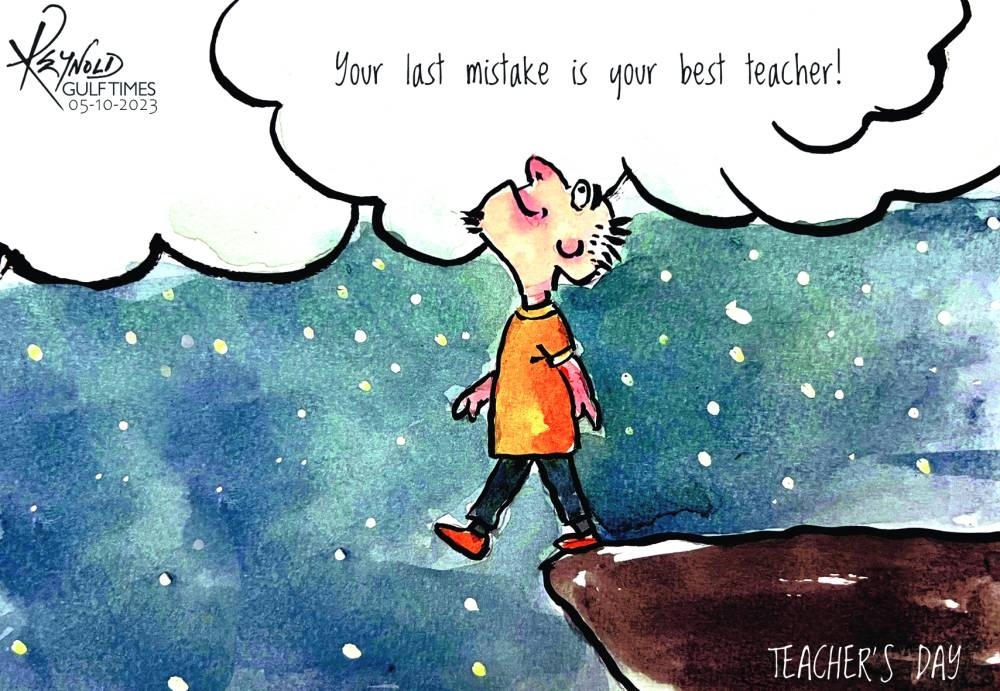
Who is your best teacher?

Unleash the Power of Continuous Improvement: Embrace the art of learning from your mistakes, for it is through this transformative process that you can truly elevate yourself and your abilities. Each error you encounter becomes a stepping stone towards greatness, propelling you forward on the path of growth in every facet of your life, be it personal, professional, or any other pursuit you embark upon.

Wisdom and Experience: The significance of your most recent mistake is often heightened due to its recency. The underlying concept here posits that the lessons gleaned from your most recent misstep can be particularly potent as they can be promptly applied to your present circumstances and decision-making processes.

Embracing your mistakes and harnessing them as invaluable learning opportunities is the key to developing extraordinary resilience! Instead of allowing failure to deflate your spirit, you rise above with unwavering adaptability, ready to conquer any challenge that comes your way. So, don’t despair when faced with setbacks; they are simply stepping stones on your path towards greatness!

Learning from your past mistakes is an essential step towards self-improvement. By analyzing and comprehending the reasons behind your previous mistakes, you can develop a better strategy to handle similar situations in the future. This approach will help you grow and develop as an individual, and enable you to overcome challenges with greater ease. With each mistake, you gain valuable experience and knowledge, and can use that to your advantage in future endeavors.

The Fear of the Lord

Protection and Provision: Psalm 34:7 says, “The angel of the LORD encamps around those who fear Him, and He delivers them.” The fear of the LORD can lead to God’s protection and provision in our lives. It signifies a trust in God’s care.

God’s Grace is Sufficient to sustain and bless us in every situation.